
How Old Is My Dog in Human Years?

🐶 Have you ever looked into your dog's eyes and wondered, "How old is my dog in human years?" Stop using the outdated "multiply by 7" rule and discover the science-backed way to understand your furry friend's true age!
Have you ever looked into your dog's eyes and wondered, "How old is my dog in human years?" We see our furry friends grow from tiny, wobbling puppies into wise, gray-faced companions, and it's natural to want to understand their journey.
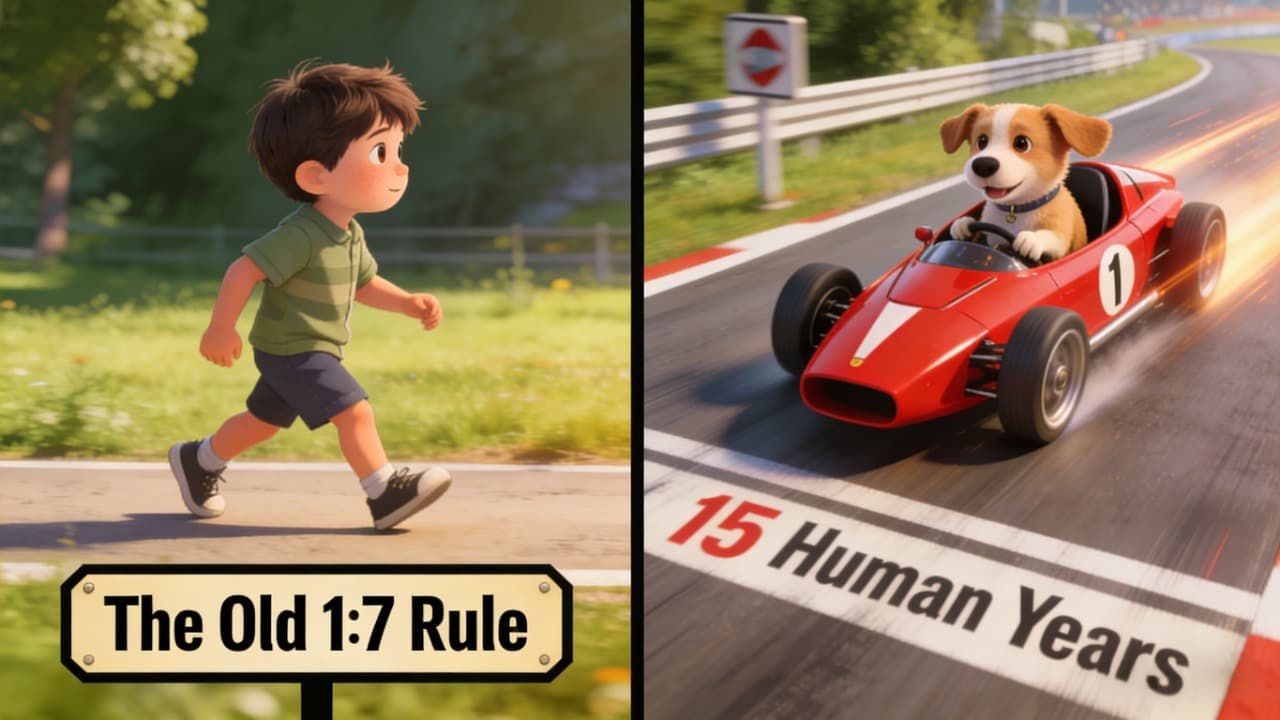
For a long time, the world followed a simple rule: just multiply your dog's age by seven. But I'm here to share a secret: that old rule is a myth!
Think about a one-year-old dog. If the "1:7" rule were true, they would be like a seven-year-old child. But a one-year-old dog is already a teenager who can have puppies of their own, while a seven-year-old human is still waiting for the tooth fairy. Dogs don't age in a straight line; their lives are much more complex than a simple math problem.
The Death of the "1:7 Rule"
The famous "7-year rule" started around the 1950s. People noticed that humans lived to about 70 and dogs lived to about 10, so they did some quick math: 10 × 7 = 70. It was easy to remember, but it ignored how unique every dog is.
Modern science shows that dogs age very, very fast when they are young and then slow down as they get older.
Today, veterinarians use a "15-9-5" guideline. The first year of a dog's life is like 15 human years because they are racing through childhood and puberty. The second year adds about 9 more years, meaning by their second birthday, your pup is already 24 in human years! After that, every dog year is roughly 4 to 6 human years, depending on how big your dog is.
Why Size Is the Secret Ingredient
In the wild, big animals like elephants usually live longer than tiny ones like mice. But in the world of dogs, it's the opposite!
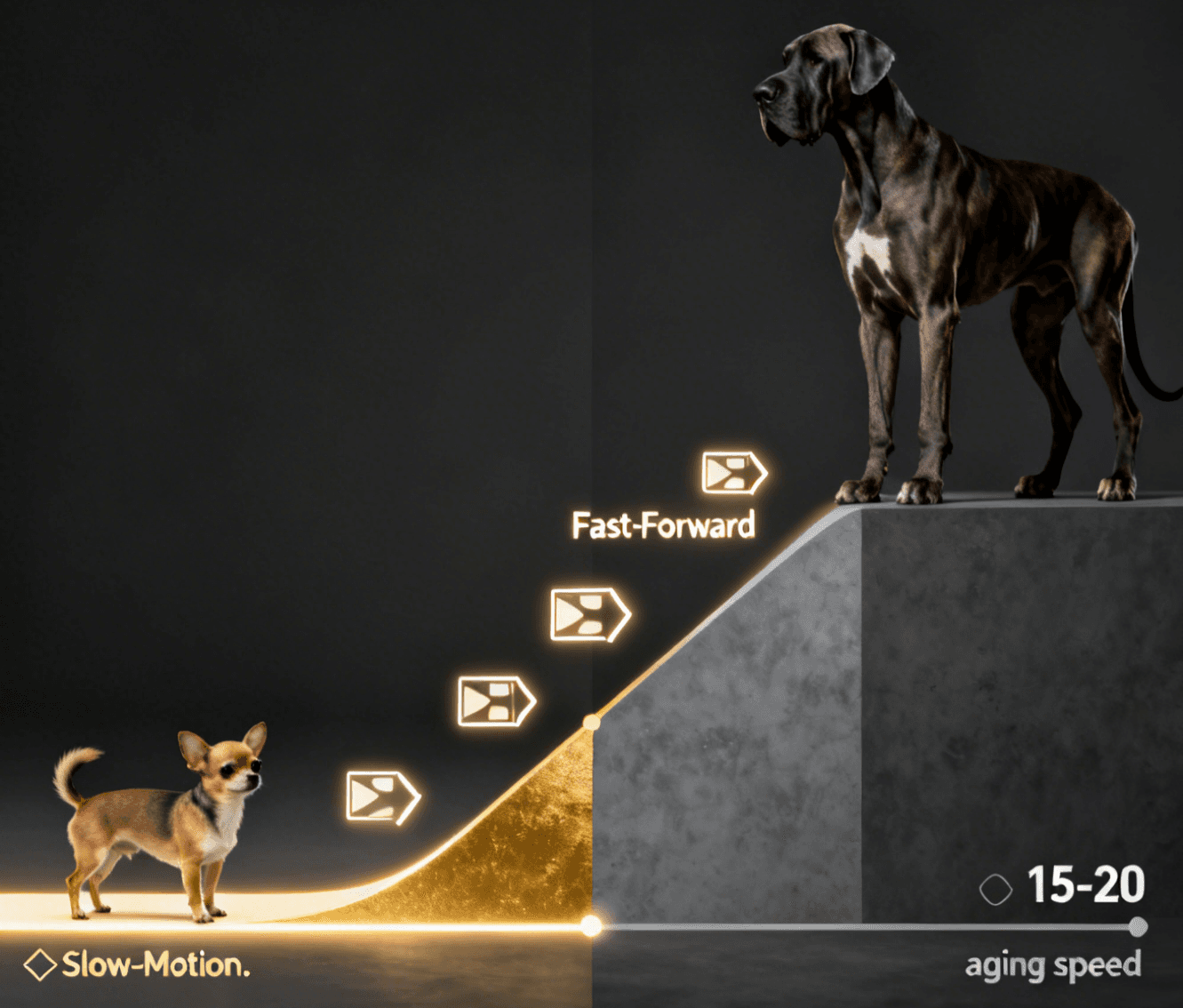
Small dogs, like a Chihuahua, can live well into their teens or even twenties. Meanwhile, giant dogs, like a Great Dane, are considered "seniors" by the time they are only 6 or 7 years old.
Why do big dogs age like they are in a "fast-forward" movie? Scientists believe it's because big dogs grow so quickly from puppies to giants. This rapid growth can cause "biological wear and tear" and makes them more susceptible to certain diseases, like cancer, at a younger age.
For every 4.4 pounds of body mass, a dog's expected lifespan can go down by about a month. This is why knowing your dog's age in human years requires looking at their weight category: Small, Medium, Large, or Giant.
The High-Tech "DNA Clock"
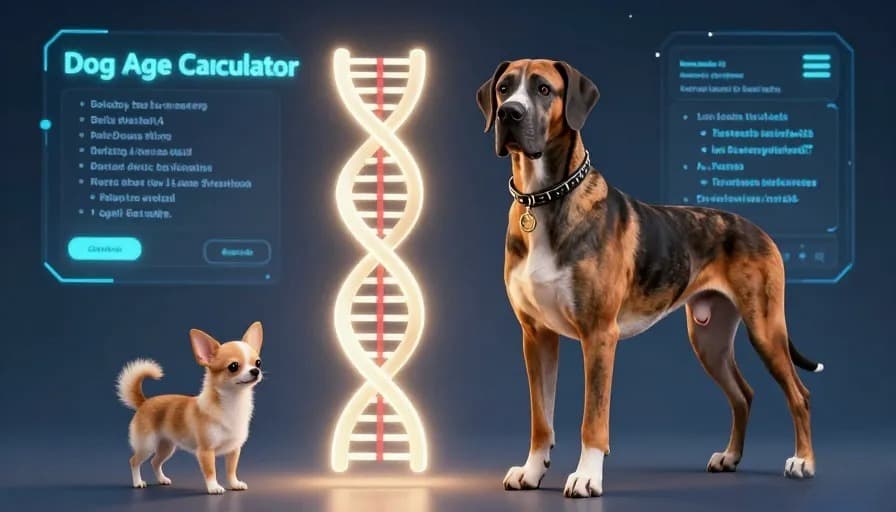
If you love science, you'll be excited to hear about the "Epigenetic Clock". Researchers at the University of California, San Diego, studied the DNA of Labradors and found "biological wrinkles" called methyl groups.
By comparing these to human DNA, they created a new formula: Human Age = 16 × ln(dog_age) + 31.
This formula proves that dogs are young adults much sooner than we thought, but it also shows that their aging process slows down significantly as they get older.
If that sounds like too much math, our Dog Age Calculator can do all the heavy lifting for you!
Be a "Pup Detective": Clues You Can See
What if you rescued a dog and don't know their birthday? You can still estimate their age by looking for these three signs:
1. The "White Pearls" (Teeth) Puppies get all their adult teeth by 7 months old. Bright white teeth usually mean a young adult (around 1 year), while yellowing or tartar suggests a dog is 3 to 5 years old.
2. The "Cloudy Windows" (Eyes) Senior dogs often get a bluish tint in their eyes called lenticular sclerosis. It looks like a window with fog on it, but it's a normal part of getting older.
3. The "Gray Beard" (Fur) Just like us, dogs get gray hair, usually starting on their muzzle. While genetics can make some dogs turn gray early, it's often a sign they've enjoyed many years of playing fetch.
Caring for Your Dog's "Human Age"
Once you know your dog's real stage in life, you can become an even better "pack leader".
Senior Check-ups: Once your dog enters their senior years—which is roughly the last 25% of their expected life—you should visit the vet twice a year. Catching problems like arthritis or dental disease early makes a huge difference.
Special Fuel: Older dogs have slower metabolisms and might need fewer calories to prevent obesity, which is a big threat to their health.
Comfort is Key: If your friend is now a "human grandpa," they might need an orthopedic bed for sore joints or ramps to help them get into the car.
No matter if your dog is 7 or 70 in human years, they still need the same thing: lots of love, gentle walks, and plenty of belly rubs. Every gray hair tells a story, and now you have the tools to honor that story with the best care possible.